If you want homeownership in Bloomington without taking on a big yard, a long maintenance list, or the full cost of a detached house, a condo or townhome may be worth a closer look. For many buyers, especially first-time buyers, downsizers, and people relocating to Monroe County, this style of living can offer a practical path into the market. The key is knowing that not all attached homes work the same way, and the fine print matters just as much as the floor plan. Let’s dive in.
Why condos and townhomes stand out
Bloomington has a different housing profile than many nearby communities. Census data shows just 34.7% of housing units in Bloomington are owner-occupied, compared with 54.0% in Monroe County overall. With a 2025 population estimate of 83,307 and Indiana University Bloomington reporting 48,626 students in fall 2025, demand for housing remains strong, and ownership options that fit smaller households can be especially important.
That local context helps explain why condos and townhomes get attention from buyers. They can offer a smaller footprint, fewer private exterior chores, and a more manageable ownership experience than some detached homes. In a city where rental pressure is high, they may also appeal to buyers who want to build stability through ownership.
Bloomington supply is relatively limited
One important thing to know up front is that this segment is not unlimited in Bloomington and Monroe County. A 2025 Monroe County housing study says townhomes make up a small part of the for-sale market, with about 72 townhome sales per three-month period compared with 385 total sales. The same study notes that only a couple dozen townhomes may be listed at a time, compared with roughly 450 to 500 houses.
Location can be a factor too. According to that same study, many townhome listings are on Bloomington’s outskirts rather than in more central locations. If you want attached living close to specific parts of town, you may need to act quickly when the right property comes up.
Condo vs townhome: know the difference
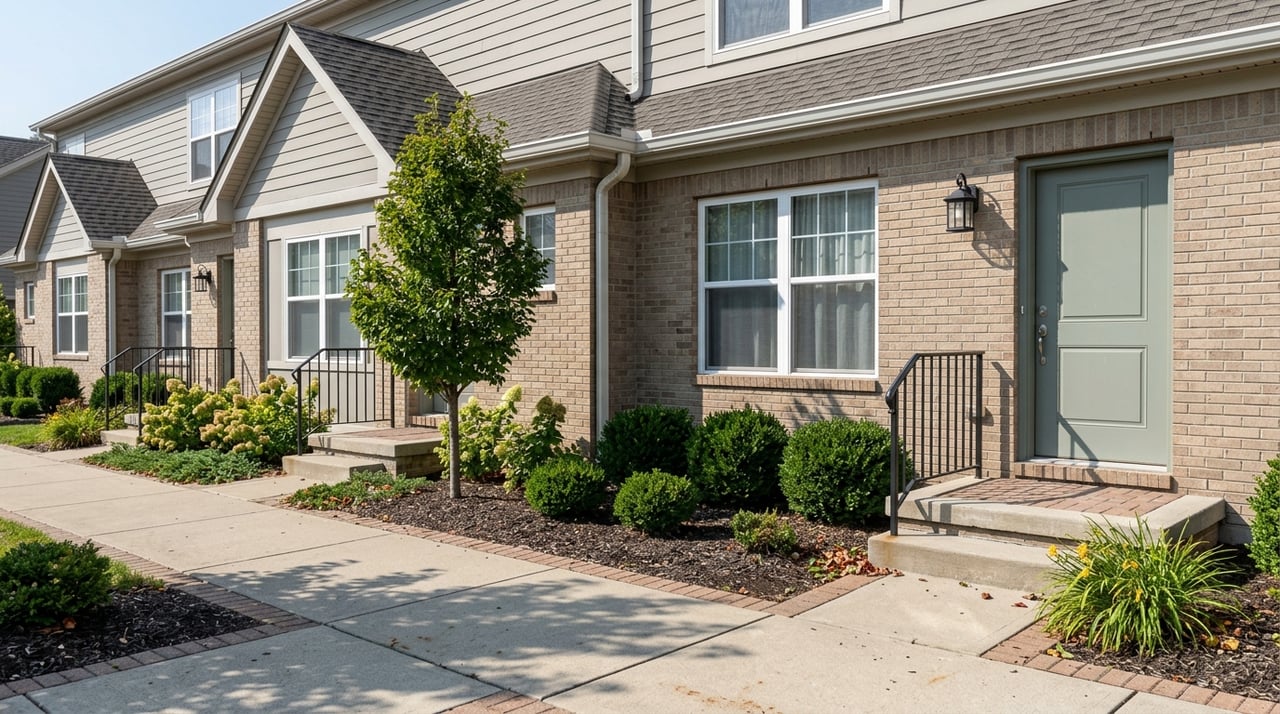
A lot of buyers use “condo” and “townhome” as if they mean the same thing, but they do not always describe ownership in the same way. A townhome usually describes the building style, often a two- or three-level home attached by one or more shared walls. A condo describes a legal ownership structure.
That means a townhome can be fee simple, condominium ownership, or part of a planned development with a homeowners association. Two homes that look almost identical from the street can come with very different responsibilities, rules, and monthly costs. In Bloomington, that distinction can affect your financing, insurance, and day-to-day ownership experience.
How condo ownership works in Indiana
In Indiana, condominiums and homeowners associations are covered under different parts of state property law. Indiana law states that a condominium owner owns the unit plus an undivided interest in the common areas and facilities. In practical terms, that means part of what you own individually is your unit, while other parts of the property are owned in common with other owners.
This is one reason condo documents matter so much. Shared ownership of common areas usually comes with mandatory fees, association oversight, and rules about maintenance responsibilities. Before you make an offer, you want to understand exactly what is yours alone and what is shared.
What your monthly cost really includes
One of the biggest mistakes buyers make is comparing only the mortgage payment. With a condo or townhome, your true monthly housing cost may also include association dues, insurance, and other recurring expenses. Those costs can change the affordability picture in a big way.
Condo fees may cover repairs, common-area maintenance, water, sewer, trash, recreational amenities, insurance, or reserve funding. But buyers should never assume those items are included. In one Bloomington community, exterior maintenance and trash may be part of the fee, while in another, parking, amenities, or certain repairs may be handled differently.
Insurance works differently too
Insurance is another area where attached housing can surprise buyers. Condo associations typically carry a master insurance policy for common areas, but unit owners still need their own coverage. Buyers may need HO-6 coverage, and the amount you need can depend on what the master policy does and does not cover.
That is why it is smart to ask whether the association policy covers only common elements or also parts of the unit interior. If you do not clarify that early, it can be hard to build an accurate monthly budget. A lower-maintenance property can still come with important insurance decisions.
What to review before making an offer
When you buy a condo or townhome in Bloomington, the documents are part of the property. The layout, finishes, and location matter, but the association’s financial health and rules matter too. A careful review can help you avoid unexpected costs after closing.
Here are some of the most important items to verify:
- The association budget
- Current reserve fund information
- The fee schedule and what the dues cover
- Any pending or recent special assessments
- The master insurance policy details
- The bylaws and community rules
- Any rental or leasing restrictions
- Whether the project may meet lender requirements for financing
Buyers often have only a limited time to review condo documents after an offer is accepted. That makes preparation especially important in a market where supply can be tight.
Why reserves and special assessments matter
Reserve funds are money the association sets aside for future repairs and replacements. If reserves are thin, owners may face higher dues later or a special assessment when major work comes up. That can include expenses for roofing, paving, exterior repairs, or other shared components.
A property with a comfortable monthly fee is not automatically the better deal if the association is underfunded. Looking at the reserve picture gives you a better sense of whether the community is planning ahead. It is one of the clearest ways to compare similar options beyond price per square foot.
Financing can be more complex
Condo financing is not always as straightforward as financing a detached house. Lenders may review the project’s physical condition, financial stability, debts, lawsuits, and inspection status when deciding whether a condo qualifies for the most favorable loan terms. Buyers should ask whether a project is considered warrantable.
This is especially important if you are comparing multiple properties in Bloomington. A lower-priced condo may not feel like a bargain if financing options are more limited or less favorable. Understanding lender eligibility early can save time and reduce stress during the contract process.
Lifestyle tradeoffs to consider
For the right buyer, condo or townhome living can be a smart fit. You may get less exterior maintenance, a more compact layout, and shared amenities or services that simplify daily life. That can be especially appealing if you are relocating, buying your first home, or looking to downsize.
At the same time, you should be comfortable with shared walls, association rules, and recurring dues. This style of ownership often works best when you value convenience and predictability more than having a large private lot or total control over exterior decisions. The best choice depends on how you want to live, not just what you want to spend.
Bloomington buyers should compare more than price
Because this segment is relatively limited in Bloomington, it helps to compare homes through a wider lens. Price and square footage matter, but so do location, fee structure, reserve strength, insurance setup, and financing eligibility. Those details shape both your monthly cost and your long-term ownership experience.
If you are searching in Bloomington or Monroe County, it also helps to stay flexible about location and ownership structure. A townhome on the edge of town may offer a very different value story than a centrally located condo, even if the list prices look similar. The more clearly you understand your priorities, the easier it is to spot the right fit.
A smart approach for local buyers
In a market shaped by strong rental demand, limited attached for-sale inventory, and a wide mix of ownership structures, condo and townhome buying takes a little extra homework. The payoff is that the right property can offer a practical and lower-maintenance path to ownership in Bloomington. When you know what questions to ask, you can shop with more confidence and fewer surprises.
If you are weighing condos, townhomes, or other homes in Bloomington and Monroe County, Amanda Richardson can help you compare options, review the details that matter, and find the right fit for your goals.
FAQs
What is the difference between a condo and a townhome in Bloomington?
- A condo is usually a legal ownership structure, while a townhome often describes the building style. A Bloomington townhome may be fee simple, a condominium, or part of a planned development with an HOA.
What should Bloomington condo buyers ask about HOA or condo fees?
- You should ask what the dues cover, how much is in reserves, whether there are pending special assessments, and what services or maintenance are included.
Why can condo financing be different in Bloomington?
- Lenders may review the project’s condition, finances, debts, lawsuits, and inspection status, so some condos may have different financing options than detached homes.
Do Bloomington condo owners need their own insurance policy?
- Yes. Associations often carry master insurance for common areas, but unit owners typically still need their own policy, often HO-6 coverage, depending on the master policy details.
Are townhomes easy to find in Bloomington, Indiana?
- Not always. Monroe County housing research shows townhomes are a relatively small part of the for-sale market, and many listings are located on Bloomington’s outskirts rather than in central areas.