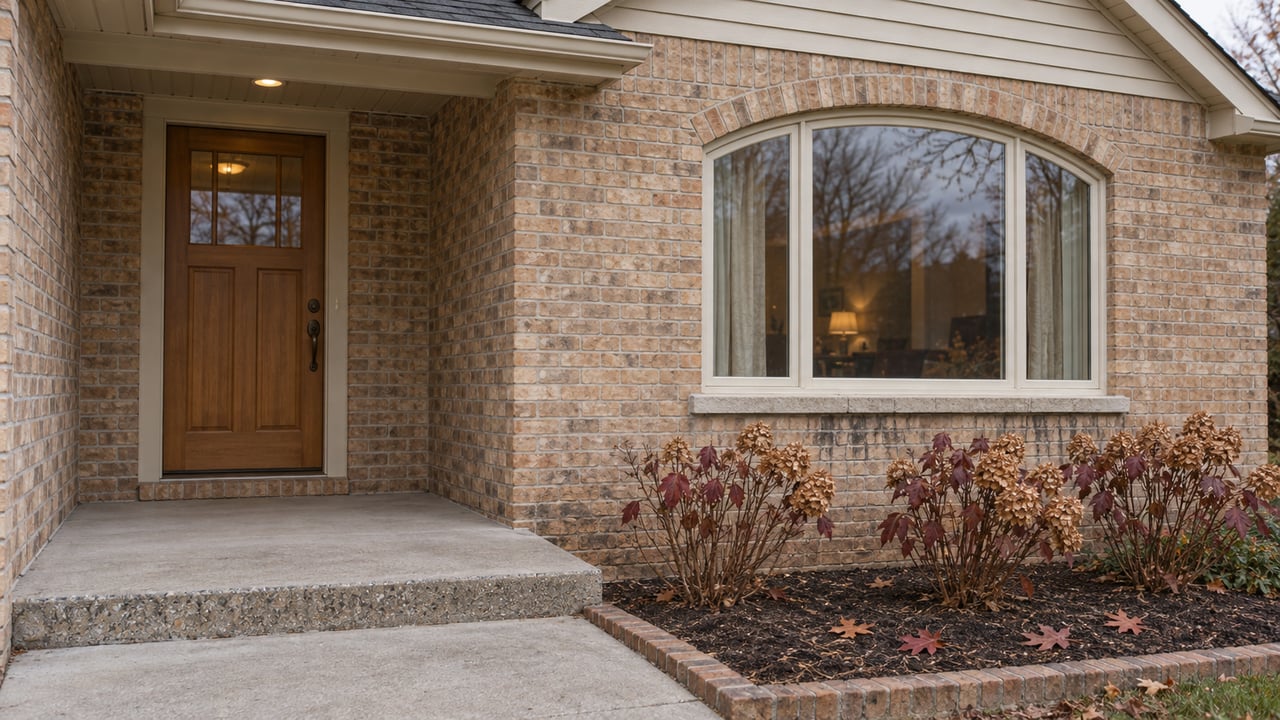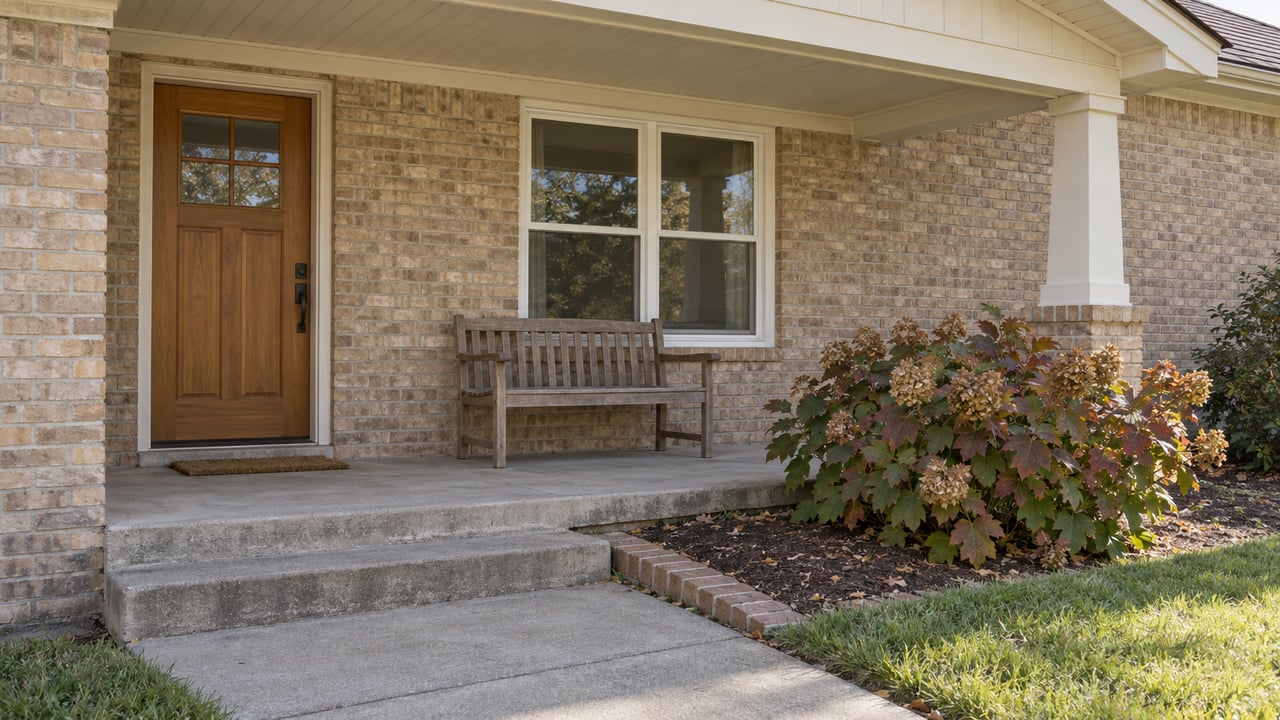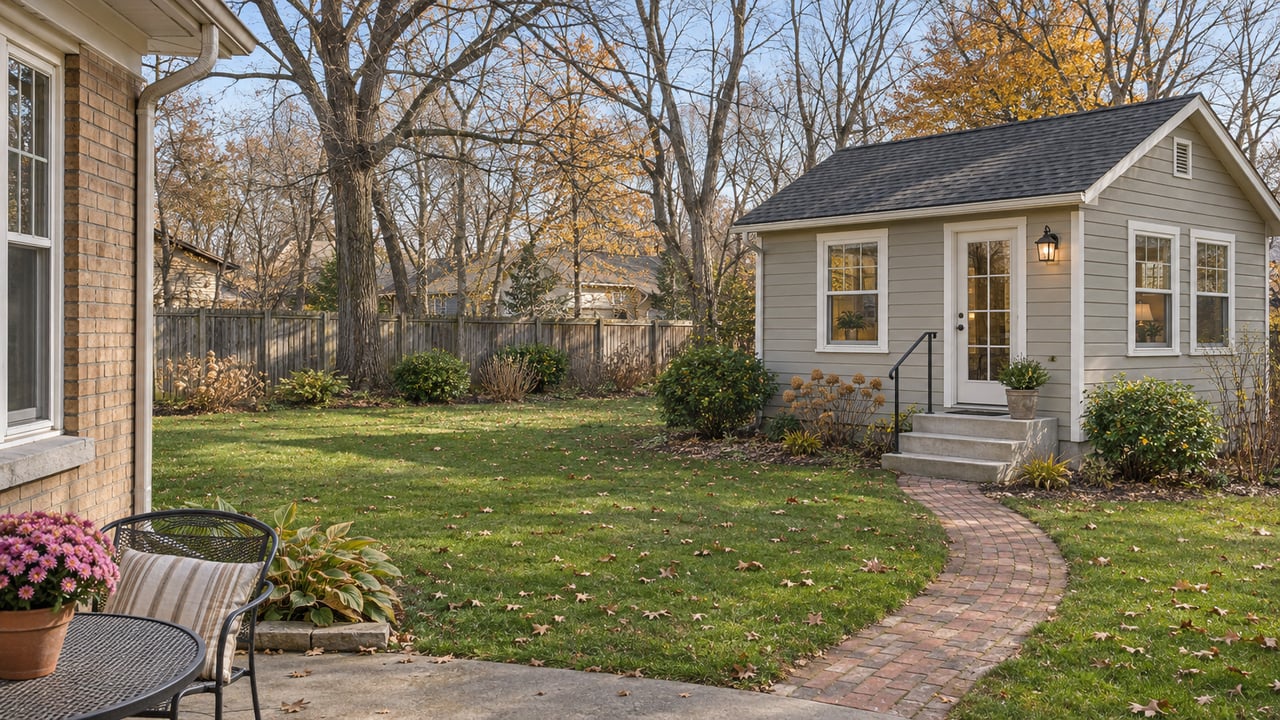
At a special plan commission hearing on Oct. 28, Bryan Park homeowner Sue McCracken described her project to the commission. She is adding a residence behind her existing house, attached to it, and plans to live in one unit and rent the other. According to The B Square Bulletin's account of the hearing, getting permission to install water and sewer service took seven months.
Her account came up at a hearing about zoning barriers, but the delay she described was about getting water and sewer service. If you're comparing older Bloomington homes because one has room for a backyard unit or a duplex conversion, that's the useful thing to know. For about five years, the limits on second units in this city have come from the steps between approval and a working water meter, not from the number of units the code allows.
The duplex cap that never filled
When the council allowed duplexes in older residential neighborhoods in 2021, it added several limits to slow them down. Mayor John Hamilton signed the change on July 12, 2021. Duplexes became conditional uses in the R1, R2 and R3 districts. Each one needed a neighborhood meeting and a hearing before the Board of Zoning Appeals. A new approval created a 150-foot buffer where no other duplex could be approved for two years. On top of that, the code capped approvals at 15 per calendar year.
City planning staff had to report the results every six months. Here is what the June 2024 progress report shows, the latest of these reports the city has published:
| Report month | Duplex inquiries | Duplex approvals |
|---|---|---|
| February 2022 | 13 | 0 |
| September 2022 | 14 | 1 |
| May 2023 | 11 | 2 |
| October 2023 | 14 | 1 |
| June 2024 | 11 | 2 |
| Total | 63 | 6 |
Across about two and a half years of reports, 63 inquiries produced six approvals. In no year did approvals come anywhere near 15. In February 2022, The B Square reported that none of the first 13 conversations had turned into an application. Some had ended because the property had a notice of violation on file with the planning department, which the duplex standards treat as a barrier. According to a May 10, 2023 city memo, the buffer stopped one inquiry in September 2022. That was an inquiry, not a denied application.
Backyard units show a similar pattern. The same memo counted about 30 ADU permit filings over time, and only one since September 2022.
What 2026 changed, and which steps remain
This year Bloomington has loosened the rules more than at any time since 2021.
- Sept. 16: The council voted 5–3 for a package that reduced minimum lot sizes and widths and eliminated citywide minimums for car parking. In the R3 and R4 districts, minimum lot area fell to 2,000 square feet and minimum width to 25 feet. A new lot behind an existing one can now be reached through a 6-foot-wide no-build easement, subject to distance and fire-access requirements, or through a 20-foot access easement with a fire-access road. Bicycle-parking minimums were restored, and so were tree-preservation rules on small R3 and R4 lots. The B Square covered the vote.
- Nov. 4: The council unanimously passed amendments that change when an older property has to bring the whole site up to current code. According to the Indiana Daily Student, only new buildings larger than 25% of the existing floor area will trigger full compliance. Smaller additions will need only limited compliance.
- Also on the Nov. 4 agenda: Ordinance 2026-31 was listed for first reading. As written in the council packet, it would allow attached ADUs up to 1,000 square feet. Detached ADUs could be 1,000 square feet or 75% of the main house, whichever is smaller, which matches the language in this year's House Bill 1001. It would also remove the 15-per-year duplex cap and the 150-foot buffer, allow a separate street-facing entrance for each unit in triplexes and fourplexes, and loosen the standards for cottage developments. The plan commission sent it forward 5–0.
Some of that relief targets costs that come up at the public microphone. At the Oct. 28 hearing, Emerson Oronte, who is working to open the outdoor sauna Side Yard Social on 6th Street, put his site-compliance costs at about $20,000. Of that, an estimated $6,000 to $7,000 was for required bicycle parking. Development services manager Eric Greulich told commissioners that about 70% of the items on the state's review list were already handled by existing rules or recent changes. He said the city is also streamlining review by having staff decide many approvals that used to need a plan commission hearing.
Removing the cap and the buffer clears out limits that, according to the city's own reports, rarely came into play. The steps that actually controlled timing were the neighborhood meeting and the Board of Zoning Appeals hearing for duplexes in R1, R2 and R3, and the utility connection that every new unit needs.
The second gate runs through the utility
"The zoning determines what's allowed. The review process determines what actually gets built."
Urban planning consultant Deborah Myerson said that at the Oct. 28 hearing, as reported by The B Square. She called for predictable deadlines, department reviews running in parallel, and pre-approved house plans.
City of Bloomington Utilities (CBU) publishes its process. According to its service installation page, upgrading an existing service to handle more plumbing fixtures or an ADU counts as a new service application. The property must have an official address assigned before you apply. Plans go in digitally through CBU's portal. Depending on the project, the submission can include utility plans, plumbing plans, fixture counts and sewer-flow calculations. CBU aims to review plans in two to four weeks, in the order they arrive, and it does not expedite full reviews. No utility work can start on site until CBU has accepted the plans and held a preconstruction meeting. CBU's rules also bar more than one customer on a sewer lateral without the utility's written approval.
The published target is two to four weeks per review. McCracken's water and sewer permission took seven months, and that difference is hard to see when you're looking at a listing.
Meter size sets the sewer bill
Cost works the same way. CBU sizes meters and service lines from fixture counts. The wastewater connection fee depends on meter size. On CBU's rates page, last updated Oct. 28, 2026, the fee is $2,775 for a ¾-inch meter and $7,104 for a 1-inch meter. If a second kitchen and bathroom push a property to the next meter size, the posted wastewater connection fee more than doubles before any construction begins. The water connection fee for a ⅝-inch to 1-inch connection is $1,533 if a tap is required and $1,327 if the tap already exists. Excavation is not included in either figure.
Planning fees are small by comparison. The city's fee schedule, updated March 19, 2026, lists $250 for a conditional use and $250 plus $25 per new dwelling unit for a residential remodel or addition site plan. These figures come from published schedules, not quotes for any particular property. This post is general information, not legal or financial advice, so confirm your property's requirements and costs with the city, CBU and your own advisors before you count on them.
Questions to ask when a listing says "ADU potential"
Since the process sets the timeline, these questions get you closer to a house's real potential than the zoning map alone:
- Which district is the lot in? In R1, R2 and R3, a duplex has been a conditional use that requires a neighborhood meeting and a Board of Zoning Appeals hearing.
- Are there any open notices of violation? Early duplex inquiries ended over exactly that.
- What size are the current water meter and service line? If the added fixtures change the meter size, the wastewater connection fee changes with it.
- Does the property have an assigned address for the new unit? CBU requires one before it accepts a service application.
- For a lot behind an existing house, which access route works? The September rules allow either a 6-foot no-build easement or a 20-foot access easement with a fire-access road, subject to distance and fire-access requirements.
- What does street parking look like on the block? Without parking minimums, some new units will have no off-street spaces. In the September debate, councilmembers pointed to narrow streets in older neighborhoods where curb space is already in demand.
People who spoke at the hearing disagreed about the trend overall. Habitat for Humanity of Monroe County's Kari Bennett backed smaller lots so that land and infrastructure costs can be spread across more homes. Kristen Weida, CEO of the Indiana Uplands Realtor Association, asked the city to make it easier to reuse vacant commercial buildings. Greenacres resident Anne Kreilkamp described larger rental buildings replacing smaller homes in her neighborhood. A buyer may find any of these views reflected on a given block.
Quick answers
Does the 15-duplex annual cap still apply? It's in the current ordinance. Ordinance 2026-31, listed for first reading on Nov. 4, would remove it along with the 150-foot buffer, and the city council's meeting page shows the next steps.
Does a backyard unit automatically need its own water meter? CBU doesn't publish a blanket rule. It sizes meters from fixture counts and decides some multi-unit setups case by case. Upgrading an existing service for an ADU requires a new service application.
What triggered this year's hearing? A new state law requires local governments to review barriers to housing development, such as lot sizes, setbacks, parking and permitting, and report to the state by the end of the year.
If you're looking at a house mainly for room to add a second unit, it helps to know the meter size, the zoning district and the approval steps before you write the offer. Amanda Sells Indiana can help you collect those details for any Bloomington property you're considering, so your offer reflects what the city and utility will actually require. Schedule a Free Consultation and bring the listing.